


Danyang Geopark

What Is a Geopark
What Is a National Geopark?
A National Geopark is an area recognized by the government for its significant geological heritage and outstanding landscape value.
It is established under Articles 2 and 36-3 of the Natural Parks Act of the Republic of Korea, and aims to conserve geological features while promoting education and geotourism.
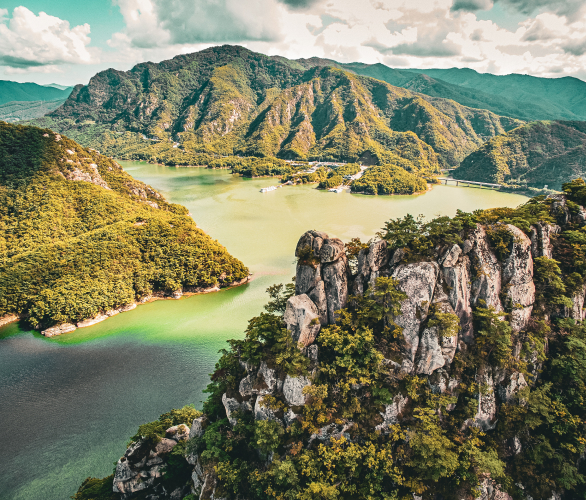
Purpose and Concept
A National Geopark seeks to conserve geological heritage and to utilize it for education and tourism, fostering the sustainable development of local communities. It embraces not only geology but also biology, archaeology, history, and culture, encouraging community-based management of natural and cultural assets.
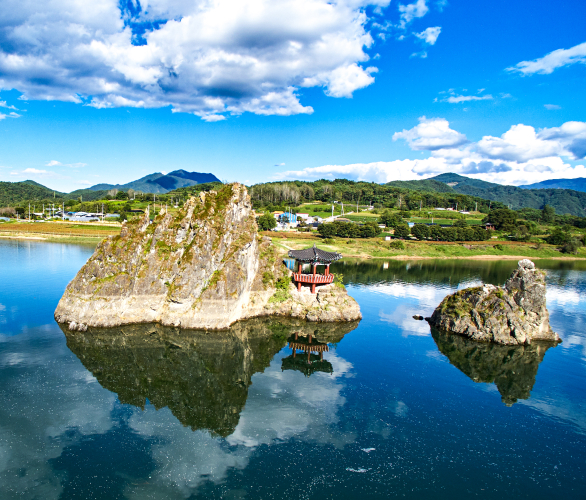
A Model for Sustainable Regional Development
Through systematic management of geoheritage and active participation of residents, the Geopark serves as a model for sustainable regional development. It integrates scientific, cultural, and ecological values within a unified management approach that balances research, education, conservation, and community benefit.
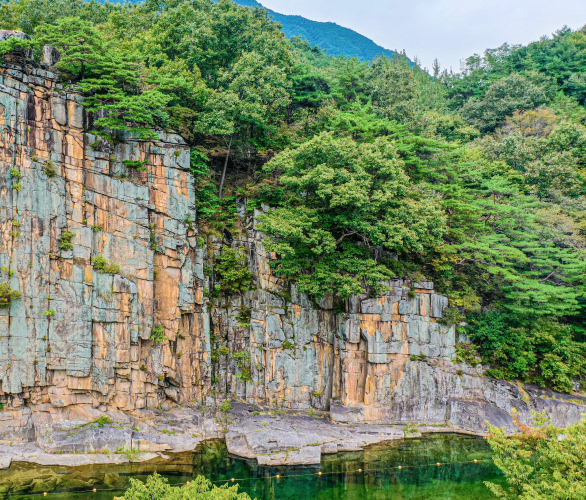
A System Balancing Conservation and Use
Unlike other strict protection systems such as National Parks, Natural Monuments, or Wetland Protected Areas, the National Geopark system emphasizes both conservation and sustainable use. Each Geopark designates its primary areas of interest as geosites, but does not impose land-use zoning or restrictions on property rights. This ensures that local residents experience no limitations in land ownership or livelihood, promoting coexistence between heritage protection and community well-being.

Revalidation Process
After designation, every National Geopark undergoes a revalidation process every four years. Periodic inspections assess the park's management performance, implementation of recommendations, and effectiveness of educational and outreach programs. Revalidation is decided by the National Geopark Committee, ensuring that each Geopark continues to meet the scientific, educational, and administrative standards required by national policy.
What Is a UNESCO Global Geopark?
A UNESCO Global Geopark is an area designated by UNESCO that is managed under the concept of protection, education, and sustainable development, for the purpose of conserving sites and landscapes of international geological value.
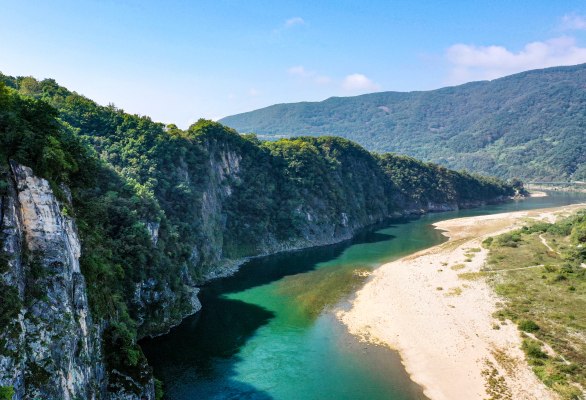
The UNESCO Global Geopark Network
The UNESCO Global Geopark Network consists of National Geoparks, certified by their respective countries, and Global Geoparks, accredited by the UNESCO Global Geopark Council (UGGp). A Global Geopark refers to a National Geopark that has become a member of the Global Geoparks Network (GGN). In November 2015, at the UNESCO General Conference, Global Geoparks were officially approved as one of UNESCO's formal programs, alongside World Heritage Sites and Biosphere Reserves. The Global Geoparks Network (GGN) was established in February 2004 and includes regional groups such as the European Geoparks Network (EGN) and the Asia-Pacific Geoparks Network (APGN).
To receive UNESCO Global Geopark designation?
To receive UNESCO Global Geopark designation, a region must first be certified as a National Geopark. After national certification, an application is submitted to UNESCO, and the area is evaluated through field inspections and expert assessments. If the evaluation confirms that the site meets the required standards, it becomes a member of the UNESCO Global Geoparks Network (GGN). Every four years, the geopark undergoes a revalidation process to review its ongoing management and performance. Even if a geopark does not pass the revalidation, it still retains its status as a National Geopark. As of now, there are 229 UNESCO Global Geoparks in 50 countries across Europe, Asia, Oceania, North America, and South America.
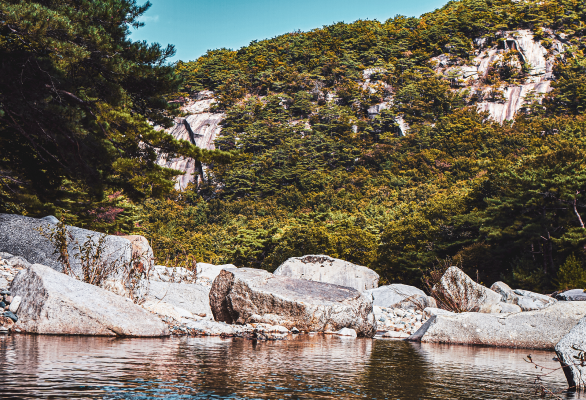
Danyang UNESCO Global Geopark
In Korea, the regions designated as UNESCO Global Geoparks are: Jeju Island (2010), Cheongsong (2017), Mudeungsan Area (2018), Hantangang River (2020), Jeonbuk West Coast (2023), Danyang (2025), and Gyeongbuk East Coast (2025). Danyang began preparing for its UNESCO Global Geopark certification in 2021, submitted its candidate application in 2022, and officially submitted the UNESCO Global Geopark application in 2023. Following an on-site evaluation by UNESCO experts, Danyang was officially designated as a UNESCO Global Geopark in April 2025.